
• Skip to primary navigation
  • Skip to main content
  • Skip to footer
spiritfilledhome.com

spiritfilledhome.com

Honest Christianity | Real Breathrough

Jenny

Overcoming Confusion in Spiritual Warfare

April 1, 2026 by Jenny

The Spiritual Battle Behind Confusion

Overcoming confusion in spiritual warfare is something many believers face but rarely understand. When life begins to feel chaotic, decisions feel unclear, and your thoughts seem scattered, it may not simply be stress or emotion. Scripture shows that confusion can often be part of a spiritual battle that targets the mind and heart.

The enemy often works through confusion because confusion weakens discernment and slows obedience. When the mind becomes clouded, it becomes harder to recognize truth.

Yet God is not the author of confusion. His presence brings clarity, peace, and direction.


Why Confusion Appears in Spiritual Warfare

Many believers assume that confusion means they have failed spiritually. In reality, confusion often arises when pressure, fear, and spiritual resistance collide at the same time.

Moments of chaos may come during:

  • major life transitions
  • emotional stress
  • spiritual growth
  • new obedience to God

These seasons can feel disorienting because they expose internal beliefs that have not yet been fully aligned with truth.


Overcoming Confusion in Spiritual Warfare Through Truth

Scripture reminds us that believers are not defenseless in these moments. God provides spiritual weapons designed specifically for spiritual battles.

Some of the most powerful include:

  • The Word of God – truth that cuts through lies
  • Prayer – realignment with God’s presence
  • Faith – trust that steadies the heart when circumstances feel unstable
  • The Holy Spirit’s guidance – quiet clarity that brings direction

These weapons do not remove every difficulty, but they restore clarity in the middle of confusion.


Renewing the Mind in the Middle of Chaos

One of the most important spiritual disciplines in times of confusion is renewing the mind with truth.

Romans 12:2 reminds believers that transformation happens when the mind is renewed. This means allowing Scripture and the Holy Spirit to reshape the beliefs that influence our reactions.

When truth replaces distortion, confusion begins to lose its power.


Choosing Faith When Emotions Feel Unsteady

Confusion often produces emotional instability. Fear rises. Doubt increases. Decisions feel heavy.

In these moments, faith becomes a stabilizing anchor.

Faith does not require perfect understanding. It requires trust in the character of God even when the path forward feels unclear.

As believers lean into faith rather than reacting to chaos, peace begins to return.


Walking in Clarity Again

The goal of spiritual warfare is not simply survival. God desires to bring His people into clarity, confidence, and steady faith.

As confusion lifts, believers often notice:

  • clearer discernment
  • calmer decision making
  • stronger trust in God’s voice
  • greater stability in difficult situations

Spiritual battles do not define the believer. They become opportunities for deeper growth and stronger faith.

Filed Under: Buisness

Why I Still Feel Unfulfilled as a Christian
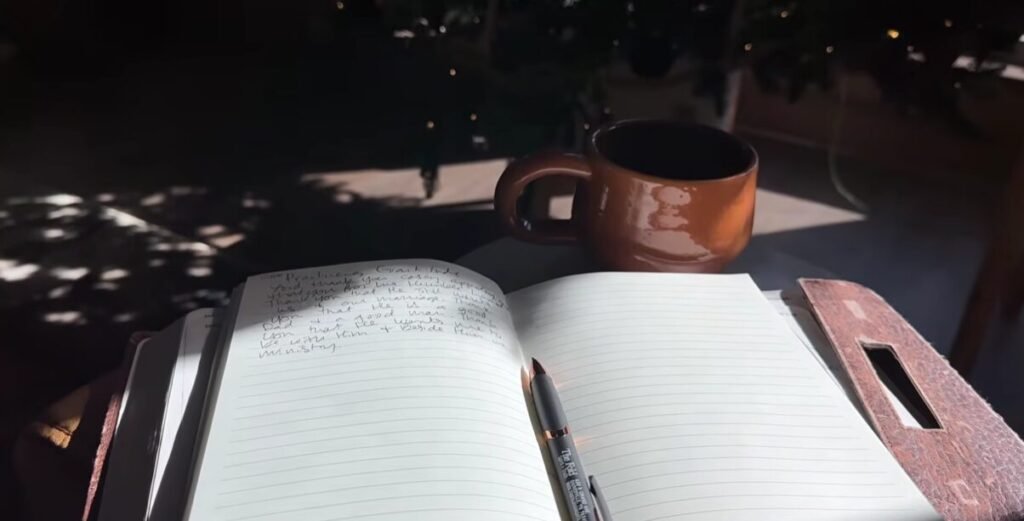
March 31, 2026 by Jenny

For a long time, I carried a quiet question underneath everything I was doing.

Why do I still feel unfulfilled as a Christian?

I wasn’t asking it out loud. I wasn’t rebellious. I wasn’t walking away from my faith. In fact, I was doing all the right things.

I read my Bible.
I served.
I prayed.
I showed up consistently.

From the outside, my life looked steady.

But internally, something didn’t feel settled. I didn’t feel deeply safe. I didn’t feel fully known. I didn’t feel the kind of steady joy and peace I assumed mature Christians were supposed to experience.

And because I was doing all the right things, I didn’t know what else to fix.


When Doing More Didn’t Make Me Feel Fulfilled as a Christian

At one point, I assumed the problem was knowledge. Maybe I didn’t understand Scripture well enough. Maybe I needed longer quiet times. Maybe I needed to serve more faithfully.

So I doubled down.

When I entered Bible college and began studying Scripture forty hours a week, I expected something inside of me to finally settle. If knowing more about God was the solution, surely that would fix why I still felt unfulfilled as a Christian.

It didn’t.

I knew more theology. I could explain doctrine clearly. I understood passages in context. Yet even surrounded by truth, I still felt like something was missing.

That was my first real clue.


The Checklist Version of Faith I Learned Early

Looking back, I realize I had built a quiet structure in my heart.

I grew up with a version of faith that looked like this:

Stay disciplined.
Avoid obvious sin.
Follow the rules.
Serve faithfully.
Stay consistent.

And honestly? I was good at that. I like clarity. I like structure. I like knowing what “right” looks like.

If faith was a checklist, I could complete it.

But over time, something surfaced that I couldn’t ignore. I noticed I was often frustrated with people. I corrected quickly. I told them what they should do. I genuinely believed I was helping.

Instead, they often felt unseen.

Eventually I had to admit something uncomfortable.

The way I interacted with people reflected how I believed God interacted with me.


The Belief I Didn’t Know I Was Living From

I would never have said this out loud at the time.

But deep down, I believed God was slightly disappointed in me.

If I felt sad, I should get over it.
If I felt overwhelmed, I should pray harder.
If I felt lonely, I should be more grateful.

I equated emotion with weakness. I quietly believed that bringing my sadness to God sounded like complaining.

I even used Scripture to reinforce that belief. The Israelites grumbled in the desert, and God was angry. So if I expressed frustration or hurt, was I grumbling too?

Because of that belief, I kept my real emotions at a distance.

Which meant I kept myself at a distance.

No wonder I still felt unfulfilled as a Christian.


When Spiritual Performance Replaces Relationship

Around the same time, I began noticing something else.

I wasn’t just serving. I was performing.

I served more.
I prayed longer.
I led studies.
I checked every box.

But if I am honest, it wasn’t always flowing from love. It was flowing from fear.

Subconsciously, I believed I had to do in order to receive.

If I read enough.
If I served enough.
If I stayed disciplined enough.

Then I would be enough.

That is spiritual performance.

It looks devoted on the outside. But underneath, it says, “If I do enough, maybe I will finally feel accepted.”

Scripture says clearly:

“For it is by grace you have been saved, through faith — and this is not from yourselves, it is the gift of God — not by works.” — Ephesians 2:8–9

I knew that verse. But I wasn’t living it.

Instead of responding to His goodness, I was trying to secure it.

Instead of serving because I felt close to Him, I was serving to feel close to Him.

And that reversal will always leave you unfulfilled as a Christian.


What Changed When I Actually Encountered Him

The shift did not come from trying harder.

It came from slowing down.

When I began praying honestly — not performing, not reciting — but actually interacting, something surprised me.

He was gentle.

He was kind.

He was not annoyed.

Every time I encountered Him personally, He aligned perfectly with this:

“The Lord is compassionate and gracious, slow to anger, abounding in love.” — Psalm 103:8

The version of God I had imagined — irritated, dissatisfied, disappointed — did not match who He actually is.

And when that truth settled into my heart, something inside of me exhaled.


Learning to Bring My Emotions to God

Once I realized He was gentle, I began bringing Him what I had been hiding.

My sadness.
My frustration.
My loneliness.
My disappointment.

Before that, I had blocked myself. I thought emotional honesty was immaturity. I thought strength meant pushing through.

But Jesus Himself brought anguish to the Father.

“My soul is overwhelmed with sorrow to the point of death.” — Matthew 26:38

That was not grumbling. That was relationship.

And when I finally allowed myself to be honest with God, I experienced connection in a way I never had before.


The Parking Garage Picture

Let me explain it this way.

Imagine walking alone in a dark parking garage at night. Two men step out from behind a car. Immediately, fear floods your body.

Why?

Because of what you believe.

You believe you are alone. You believe you are unprotected. You believe you are vulnerable.

Now imagine walking through that same garage with a strong, capable protector beside you. The situation has not changed.

But your belief has.

And that belief changes how you respond.

In the same way, if you believe God is distant or disappointed, life feels heavy and threatening.

However, if you believe He is near, protective, kind, and attentive — everything feels different.

The circumstances may remain the same.

But your internal stability changes.


If You Still Feel Unfulfilled as a Christian

If you are quietly asking, why do I still feel unfulfilled as a Christian, it may not be because you need to do more.

It may be because of what you believe.

Start gently noticing patterns.

Where do you feel pressure instead of peace?
Where do you feel like you must prove yourself?
Where do you struggle to rest?

Then ask softly:

Is there something I believe about God that is not true?

We rarely believe lies intentionally. They settle in quietly. They attach themselves to good doctrine. They hide underneath spiritual discipline.

But God is patient.

He wants to untangle the beliefs that keep you striving.

And when those beliefs shift, everything shifts.

If I had to answer that old question now — why do I still feel unfulfilled as a Christian — I would say this:

I was performing instead of responding.
I was striving instead of resting.
I was hiding my heart instead of bringing it to Him.

And once that changed, everything else began to change too.

Filed Under: Faith

Loneliness in Marriage: When You Feel Alone Beside Your Spouse

March 26, 2026 by Jenny

Nobody prepares you for loneliness in marriage.

Most Christians grow up believing marriage will finally make them feel loved, full, complete, and whole. We assume this is where the ache ends. This is where connection becomes easy. This is where we will finally feel understood.

And then one day, you are lying next to the person who promised to love you — and you feel completely alone.

No one prepares you for deep misunderstandings.
No one prepares you for explaining yourself over and over — and still not being heard.
No one prepares you for the moment when your words land backwards and the person you are trying to reach feels offended instead of connected.

That kind of loneliness in marriage is disorienting.

When You Feel Deeply Alone in Marriage

You may find yourself asking questions you never thought you would ask.

Am I stuck like this forever?
Is it always going to feel this way?
Did I marry the wrong person?
Did I miss God?
Does He want me to live in perpetual pain?

Those thoughts do not usually come from rebellion. They come from exhaustion.

Sometimes you are not trying to win an argument. You are simply trying to feel understood. And when that understanding does not come, something inside you starts to shut down.

Some women withdraw emotionally.
Others stop explaining.
Some begin functioning beside their spouse instead of with him.

The marriage still exists. The covenant still stands. But emotional connection feels thin.

That is what loneliness in marriage can look like.

Why Loneliness in Marriage Feels So Heavy

Loneliness outside of marriage hurts. Loneliness inside marriage cuts deeper.

Marriage carries expectation. You expect this relationship to be safe. You expect this to be the place where you are known. So when misunderstanding shows up, it feels like betrayal — even when it is not.

Often what is happening is not rejection. It is difference.

Different communication styles.
Different emotional wiring.
Different ways of processing conflict.

Two people can love each other deeply and still struggle to translate what they are trying to say.

That reality does not erase the pain. However, it reframes it.

Loneliness in marriage does not automatically mean you chose the wrong person. Sometimes it means you are discovering the places where growth still needs to happen.

The Temptation to Shut Down

When loneliness lingers, the temptation is to protect yourself.

You may decide it is safer not to need so much.
You may tell yourself to lower expectations.
You may quietly build walls so disappointment does not hit as hard next time.

Over time, distance grows.

Not because love disappeared.
But because hurt never found resolution.

Scripture says, “Be completely humble and gentle; be patient, bearing with one another in love” (Ephesians 4:2).

Patience in marriage does not mean pretending everything is fine. It means choosing not to let hurt become hardness.

Marriage Was Never Meant to Replace God

One of the hardest realizations in loneliness in marriage is this:

Your spouse was never meant to complete you.

We often expect marriage to fill spaces only God can fill. That expectation quietly creates pressure. No human can carry the weight of being someone else’s source of wholeness.

When you feel alone in marriage, it may expose where you have looked to your spouse to meet needs that only God can truly satisfy.

That does not minimize your desire to be understood. It simply places your identity back in the right place.

Psalm 34:18 reminds us, “The Lord is close to the brokenhearted.”

That includes the brokenhearted inside marriage.

If You Are Feeling Alone in Marriage

If this is you right now, pause before making permanent conclusions about a temporary season.

Name what you are actually feeling. Is it rejection? Is it exhaustion? Is it fear?

Separate misunderstanding from intent. Not every miscommunication is malicious.

Choose timing carefully. Hard conversations rarely heal when both people feel defensive.

Most importantly, bring God into the space before you bring your spouse into it. Let Him steady your emotions so your words do not come from panic.

Loneliness in marriage does not automatically mean your marriage is broken beyond repair. Sometimes it means both of you are still learning how to love each other well.

That learning can feel painful.

However, pain does not always signal the end. Sometimes it signals an invitation — to deeper communication, deeper humility, deeper dependence on God.

You Are Not Alone in This

If you are lying next to someone you love and still feeling alone, you are not strange. You are not weak. You are not failing at marriage.

Many couples walk through seasons like this. They simply do not talk about them openly.

Loneliness in marriage is real. Yet it does not have to define your story.

God does not waste hard seasons. He can use even misunderstanding to shape patience, maturity, and deeper intimacy — if both hearts remain soft.

You do not have to leap to drastic decisions tonight.

Stay. Pray. Breathe.
Let God meet you in the middle of it.

He is present in the loneliness. And He is not finished with your story.

Filed Under: Faith, Family

Dreaming With God Can Change Everything

March 17, 2026 by Jenny

Dreaming with God can change everything about the direction of your life. Five years ago, I never imagined that dreaming with God would take me from overwhelmed working mom to building a slower, more present life on land we had prayed for. Yet that is exactly what happened.

I want to tell you how it unfolded — because if God did it for us, He can lead you too.

“Now to Him who is able to do exceedingly abundantly above all that we ask or think…” – Ephesians 3:20 (NKJV)


What If You’re Allowed to Dream With God?

About five years ago, one question kept rising in my heart:

What if I’m allowed to dream?

Not in a reckless way. Not in a fantasy way. But what if I could actually sit with God and imagine the life He designed for our family?

At the time, my husband and I had just purchased what felt like a miracle property. I had written specific prayers inside my Bible: 25–35 acres, trees, water, under $250,000. It was a bold list. Still, after years of praying, every detail fell into place. We closed at the beginning of 2020.

However, even while standing on that land, grateful and stunned, my life felt stretched thin.


Dreaming With God in the Middle of Real Life

I was pregnant with our fourth son. I worked full time. I brought in a significant portion of our income. And honestly, I loved my job.

I loved being creative. I loved being with women. I loved building something meaningful.

Yet if you are a working mom, you understand the weight. You still manage the laundry. You coordinate childcare. You order the clothes. You carry the emotional load of the house — and the pressure of your career.

Then the world slowed down in early 2020.

Suddenly, I saw what a slower life could feel like. And I liked it.

As I began dreaming with God, I started imagining something different:

What if my husband and I stayed home together?
What if we raised our kids side by side?
What if we homeschooled together, tended animals, grew a garden, and did ministry from our own land?

The dream felt beautiful.

It also felt impossible.


Obeying When Dreaming With God Made No Financial Sense

There was no logical way for me to stop working. We had a mortgage. We had land. We had future building plans.

Still, I sensed God inviting me to step away from my job.

It did not feel bold. It felt terrifying.

I did not respond with, “This will all work out.”
Instead, I told God, “How are we going to make money? I am not good at being poor.”

Yet I obeyed.

And God handled my fear.

He did not shame my emotions. Instead, He met me in them.

“Trust in the Lord with all your heart… and He shall direct your paths.” – Proverbs 3:5–6 (NKJV)

Dreaming with God required obedience before I saw provision.


A Surprise Provision We Never Planned

As I stepped away from work, I sketched simple rectangle floor plans. I wanted small. Manageable. Affordable.

Then my husband noticed the property next door was for sale.

It had:

  • A main house
  • A small salon inside the garage (I’m a hairdresser — what are the chances?)
  • Three rental houses generating income
  • 17 additional acres

At first, I dismissed it.

However, a client of mine — a former loan officer turned real estate agent — started asking questions. Did we have equity? Could the rental income support financing?

Because of equity in our current home and income from the rentals, we qualified.

We moved to the country sooner than we ever planned. Not only that, once everything settled, the rental income actually exceeded what we had been paying before.

God accelerated the dream.


Dreaming With God Requires Flexibility

We renovated rentals. Plans changed constantly.

One small house was going to become an Airbnb. Instead, a close friend moved in. Later, my grandparents decided to join us on the land. We shifted again.

Each adjustment felt inconvenient at first. Yet every change brought unexpected blessing.

Still, money ran tight.

We pulled equity from another property to finish the last rental. Even then, expenses exceeded income month after month. Farm equipment, repairs, remodeling — the costs added up.

Fear surfaced again.

But this was not our first time walking on financial water.

So I kept reminding myself:
God always comes through.

“For we walk by faith, not by sight.” – 2 Corinthians 5:7 (NKJV)

Dreaming with God does not eliminate fear. It teaches you how to walk through it.


Walking by Faith Is Not Comfortable

Let’s be honest.

When you step out in faith:

  • It does not feel safe.
  • It does not feel stable.
  • It does not feel impressive.

There were tears. There was complaining. There were long nights doing math in my head.

Yet we kept going.

And when I look back now, I see something clearly: the house I once sketched as a distant dream stood waiting next door the entire time.

We did not build it.

God provided it.

With acreage.

With income potential.

With space for family.


Rest Over Hustle: What Dreaming With God Taught Me

The world says hustle. Push harder. Grind more. Stay obsessed with income.

Yet dreaming with God taught me something different.

Rest requires trust.

When your nervous system relaxes, your body declares, “I believe I am cared for.”

I wish I had rested more during the journey. I wish I had worried less.

However, even in my imperfect faith, God remained steady.

“Unless the Lord builds the house, they labor in vain who build it.” – Psalm 127:1 (NKJV)

Dreaming with God is not about chasing fantasy.
It is about partnering with Him.


What Dreaming With God Could Look Like for You

Maybe your dream is:

  • Working from home
  • Starting a small business
  • Changing careers
  • Creating margin for your children
  • Building something that reflects your values

If God releases you into it, move.

The release might not feel peaceful. Sometimes it feels scary. Still, keep your eyes on Him when the waves rise.

He will redirect you if needed.
He will provide.
He will not abandon you.


Dream With God About Your Life

Today, our life looks nothing like it did five years ago. It also looks nothing like I thought it would.

It looks better.

Not easier. Not without risk. But better.

Dreaming with God reshaped our direction, our finances, our family rhythms, and my own understanding of trust.

So here is my encouragement:

Get a pen. Sit with the Lord.
Ask Him what your life could look like.

What would you build if fear were not leading?

Dream with God.

He may take you somewhere you never could have imagined on your own.

Filed Under: Buisness, Faith, Family

What If God’s Plan for Income Wasn’t Meant to Be This Hard?

March 12, 2026 by Jenny

What if God never intended His plan for income to feel this exhausting?

What if He never intended for you to live stressed, overwhelmed, and fearful about money?

Instead of constant pressure, what if His design was sustainable — and even enjoyable — because it aligned with how He created you?

Provision may not be blocked.
It may be waiting on trust.

Today, I want to share three ways income often shows up that many people overlook — and how you can begin partnering with God differently in your work and finances.


This Isn’t Laziness — It’s Exhaustion

Most people are not ungrateful or unwilling to work.

Rather, they are tired.

Tired of feeling stuck.
Tired of living under pressure.
Tired of trying and not seeing change.

Because of that exhaustion, people begin coping in ways that actually compound the problem — overspending, overworking, checking out, or settling.

Not because they lack discipline.

Instead, because they feel hopeless.

However, what if something could shift? What if, with God, you could step into how He actually wired you and build something sustainable instead of survival-based?


The Beliefs That Shape God’s Plan for Income

Before we talk about strategy, we need to examine belief.

After all, what you believe about wealth will quietly shape every financial decision you make.

Sometimes struggle feels spiritual. In fact, it can even feel humble. At times, it feels righteous to assume that wanting more is selfish.

However, is that what Scripture actually teaches?

When I began examining the biblical view of wealth, I realized some of my beliefs were shaped more by culture than by truth.

For example, Solomon’s wealth was given by God. If wealth automatically led to corruption, then why would God entrust it to him?

Likewise, the Proverbs 31 woman was buying land and selling goods while managing her household well. In other words, she was productive and engaged in commerce.

Clearly, God is not offended by income.

Instead, He is concerned with the condition of the heart.

That distinction changes everything.


When God’s Plan for Income Required $30,000 We Didn’t Have

When my husband and I were 25, we bought a 10,000 square foot building built in 1890. Although it needed work, we saw potential. Since no bank would finance it, the owner financed it instead — which already felt like a miracle.

Then the roof began to fail.

Suddenly, we needed $30,000.

And we did not have it.

As rain poured into the building, fear and anxiety followed. Because we had invested all our savings, every storm felt heavier.

Eventually, a government disaster declaration made us eligible for a small business loan. At first, it looked like the answer.

However, I felt unsettled.

So, after wrestling with it, I told God we would decline the loan and trust Him for another way. I did not feel bold. Instead, I felt scared.

Six months passed.

Then someone handed us a check for $28,000.

My husband insisted on tithing 20 percent, which left $21,000. After doing some of the demolition work ourselves, the final roofing cost came to exactly $21,000.

That experience reshaped how I see faith and finances.

More often than not, God’s provision is rarely early.

Instead, it is precise.


Why God’s Plan for Income Often Requires Risk

Peter never would have walked on water if he had stayed in the boat.

Similarly, staying safe can feel wise. However, sometimes safety is simply fear dressed up as responsibility.

At some point, trust must move from theory into action.

God’s plan for income may require stepping out of what feels predictable and into something that stretches you.

Of course, faith is not reckless.

Yet it is rarely comfortable.


How to Recognize God’s Plan for Income in Your Life

So where do you begin?

Most people already have the seeds of sustainable income in their life. The question is whether they have taken time to examine them.

Generally, those seeds appear in three places:

  • Talents
  • Interests
  • Resources

When these are partnered with strategy and faith, they can become sustainable income.


1. Your Talents and God’s Plan for Income

In the Old Testament, God anointed artisans with skill for beauty and craftsmanship.

If you are artistic, relational, organized, strategic, or mechanically inclined, those abilities are not accidental. Instead, they can serve others and generate income.

For example, an artist might create custom sentimental pieces. Likewise, someone skilled with people might thrive in real estate or client-based services.

Ultimately, the key question becomes: Who does this help?

In most cases, income follows service.


2. Your Interests Can Shape Income

Even if you do not see clear talent, you still have interests.

Cars. Gardening. Baking. Parenting. Organization. Fitness.

Chances are, you know more than someone else in that area. Because of that, there are always people willing to pay for solutions they do not want to handle themselves.

Over time, interests can become expertise.

And eventually, expertise can become income.


3. Your Resources Are Part of God’s Plan for Income

If you feel like you lack talent or interest, look at access instead.

Do you have space? Equipment? Tools? Relationships? Location?

Even something simple — like access to laundry equipment — can become a service business.

When you step back and look carefully, there is usually more potential than you initially realized.


Strategy Still Matters in God’s Plan for Income

However, faith does not replace strategy.

In every business I have built — from a salon to real estate — I learned that you must invest wisely.

Sometimes that means spending money to build systems that produce more income later.

Therefore, sustainable income is rarely accidental.

Instead, it is intentional.


You Don’t Have to Stay Stuck in God’s Plan for Income

If there is something you have quietly longed to build — a boutique, a service, or a creative venture — pay attention.

After all, that desire may not be random.

At the same time, God’s plan for income is not about hustle culture or obsession with money. Rather, it is about partnership.

In other words, it is about alignment.

You do not have to leap all at once. Instead, set measurable goals, take strategic steps, and invite God into the process.

Provision may not be blocked.

It may be waiting for your partnership.


If You’re Feeling Stuck Financially

God is not limited.

However, sometimes we are.

If you are feeling overwhelmed or stuck financially, ask yourself:

  • What beliefs are shaping my decisions?
  • What talents or interests have I overlooked?
  • Where might God be inviting me to trust Him differently?

You were not created for constant fear.

Instead, you were created for faith, wisdom, and sustainable fruit.

May you be blessed inside and out.

Subscribe

Filed Under: Buisness

Spiritual Root of Overeating: Breaking Free from Food Addiction

March 2, 2026 by Jenny

What if your struggles with weight loss weren’t actually purely physiological?

What if they were spiritual in nature and you’ve been focusing on all the symptoms instead of the root problem, and that’s why things are so hard and you feel so unsuccessful?

Well, that was exactly me.

When I was finally able to deal with the underlying problems, the spiritual root of overeating, the symptoms began to resolve themselves a lot easier.

Today, I want to tell you the story of how I broke the stronghold of food addiction in my life.


Where the Spiritual Root of Overeating Began

We need to back up a little bit, all the way to when I was eight years old.

As a kid, I felt really lonely. Not because I was alone, but because no one in my house really cared about my inner world. I felt very disconnected and very misunderstood. It felt like there was no one I could really talk to.

I needed comfort. However, I didn’t even know how to ask for it or who would really care.

When you feel that way as a child, you find ways to cope.

For me, food became my comfort. It became something I could go to anytime I needed a friend, something that made me feel full when I felt empty inside.

As a result, I put on weight. By eight or nine years old, I was really chunky. I started being bullied at school. Kids would poke fun at me and say mean things.

Still, I knew I had a safe place.


The House That Felt Like Love

About two blocks away was this wonderful, amazing house, my grandparents’ house.

It was filled with love.

Whenever I got there, I was greeted with hugs and kisses. I was deeply cared for. One of the things that was so different about their home was that they were in love.

They cuddled. They kissed. They held hands.

I could tell they deeply cared for each other, and that felt very different from the primary house I grew up in.

My grandmother loved to cook, and she taught me the love of cooking. I love cooking. She loved cooking pies, cookies, cakes, all the yummy things.

Without realizing it, I connected food with love.


What I Prayed for Every Night

When I was in third through fifth grade, I prayed for two things every night:

  1. That I would get skinny.
  2. That I would get a boyfriend who loved me.

I believed being skinny was the key to getting love, the kind of love my grandparents had.

So when I was about 12 years old, I started working out all the time. I would do about a thousand crunches a day. I barely ate. I chewed my food obsessively.

Eventually, I got really thin.

Fast forward to high school. I was thin for the first time. I got my first boyfriend. Life felt like it was going really great.

However, once I was happy, I put on the pounds.

That became the trend.

I would go through breakups and get really thin. Then, whenever I was in a relationship, I would gain weight again. I’ve yo-yo dieted and been up and down for years.

Looking back, I can see that food addiction was part of my life, but I still hadn’t addressed the spiritual root of overeating.


2024: Grief, Trauma, and Hitting My Highest Weight

Fast forward to 2024.

I had my fifth son at 36 years old. It was a lot harder getting the weight off at 36. After giving birth, I was at my all-time high, 220 pounds.

I had him in February, and then in March, my grandfather passed away.

It was the first time I experienced really deep grief.

In July, we celebrated his birthday without him for the first time. On the drive home, with all five of my kids in the car, a drunk driver hit us.

Three times.

They sideswiped us. Then they overcorrected and hit us again. Then they overcorrected again, spun in a circle, and T-boned us into my new infant’s door.

That put us on a crazy journey of survival.

At the time, my life was already packed. I help run a school and a church. I homeschool hybrid five boys. That’s a lot on one person’s plate.

Now, suddenly, I was thrown into doing PT for my children and myself. I had a concussion. None of us were seriously injured, praise the Lord, but I developed insomnia and panic attacks, which were brand new for me.

Physically, my body hurt constantly.

At the same time, my infant, who had been such a good baby, was now screaming and needing to be held all the time. Yet it hurt to hold him.

I felt overwhelmed. I felt helpless.

So I reached for food for comfort.

And I kept going to food just to survive.

I was exhausted. My body hurt. I was overwhelmed.

I kept packing on the weight until I hit my all-time high.

Something had to change.

That’s when I realized I wasn’t just battling habits, I was battling the spiritual root of overeating.


Learning to Grieve Instead of Numbing

I want to share some of the things that were real eye-openers for me, the things that helped me move toward a healthy place where it feels attainable and good instead of undoable.

First, I had to learn how to grieve.

I read a book on grief. I processed through it. I learned how to grieve. That was part of dealing with the underlying things that were driving me to food.

It wasn’t just overwhelm.

It was grief.


The Grief Recovery Handbook, 20th Anniversary Expanded Edition: T...

The Grief Recovery Handbook, 20th Anniversary Expanded Edition: T…

$7.63
Buy on Amazon

Fasting and Repentance

Then I went back to the basics.

Number one: fasting.

In Bible college, my husband and I used to fast every Friday from Thursday night to Friday night. So I returned to that rhythm.

However, before I even started fasting, I did something crucial.

Repentance.

For the first time, I really owned it.

It’s my fault that I’m the size I am.
It’s my fault what I put in my mouth.
It’s my fault.

I couldn’t blame life. I couldn’t blame stress. There’s no such thing as saying, “Well, God, I only did it because…” That’s not real repentance.

When it came to my sin of overeating, gluttony, and turning to food for comfort instead of turning to the Lord, I was making excuses instead of owning it.

And that right there will break so many things off your life if you take responsibility and ask for help.

My prayer sounded like this:

“God, I don’t have self-control. I need help. I want bad food. I go to food for comfort, and I don’t want to want that anymore. I need You to change me. I need freedom.”

I repented. I wept. I took ownership.

That repentance was key to breaking the spiritual root of overeating.


What Repentance Really Means (The Greek Root)

One of the things I learned is that repentance isn’t just remorse.

Repentance comes from the Greek word metanoia.

“Meta” means transformation or change.
“Noya” refers to your mind, how you think.

So repentance literally means to change your mind.

It’s not just feeling bad about what you did. It’s transforming the way you think.

And when you change the way you think, it changes the way you act.

Instead of trying to change my actions first, I focused on changing how I thought about food, comfort, and control.

Because your actions flow from what you’re believing and thinking.

When there is repentance, there is freedom.


Education, Sugar, and Practical Changes

Alongside prayer, fasting, and repentance, I also educated myself.

I honestly didn’t know much about nutrition. I read books about nutritional density. One major thing I learned was how addictive sugar is.

A girl I used to work with told me sugar was more addictive than cocaine. I’ve never done cocaine, but I’ve definitely done some sugar.

Once I got off sugar, I didn’t crave even regular food the same way.

That had been driving a lot of my urges.


Walking in Freedom and Finding Balance

Right now, I’m down a little more than 20 pounds.

However, I’m not focused on weight loss as much as I am on being healthy. I focus on fruits, vegetables, and lean meats. I go on long walks with my children.

The more I focus on what to eat instead of what not to eat, the more it helps.

At the same time, I don’t want to make fitness an idol. I’ve had seasons of obsession before, and I don’t want that either.

I just want balance.

Ultimately, the key aspect of walking in freedom was dealing with what was going on in my heart, the grief and the spiritual issues.

When I finally addressed the spiritual root of overeating, freedom became attainable.

May you be blessed inside and out.


Breaking the Stronghold of Food: How We Conquered Food Addictions...
Bestseller #1

Breaking the Stronghold of Food: How We Conquered Food Addictions…

$10.00
Buy on Amazon
Eat to Live: The Amazing Nutrient-Rich Program for Fast and Susta...
Bestseller #2

Eat to Live: The Amazing Nutrient-Rich Program for Fast and Susta…

$11.33
Buy on Amazon
Fasting for Breakthrough and Deliverance
Bestseller #3

Fasting for Breakthrough and Deliverance

$9.49
Buy on Amazon
Bright Line Eating: The Science of Living Happy, Thin and Free
Bestseller #4

Bright Line Eating: The Science of Living Happy, Thin and Free

$10.89
Buy on Amazon

Filed Under: Faith, Health

  • Page 1
  • Page 2
  • Page 3
  • Go to Next Page »

Footer

Design

With an emphasis on typography, white space, and mobile-optimized design, your website will look absolutely breathtaking.

Learn more about design.

Content

Our team will teach you the art of writing audience-focused content that will help you achieve the success you truly deserve.

Learn more about content.

Strategy

We help creative entrepreneurs build their digital business by focusing on three key elements of a successful online platform.

Learn more about strategy.

© 2026 Spirit Filled Home. All rights reserved.

  • Home
  • Blogs
  • Work With Jenny
  • About
  • Contact
  • Privacy Policy
  • Terms of Use
  • Youtube
  • Instagram
  • Facebook